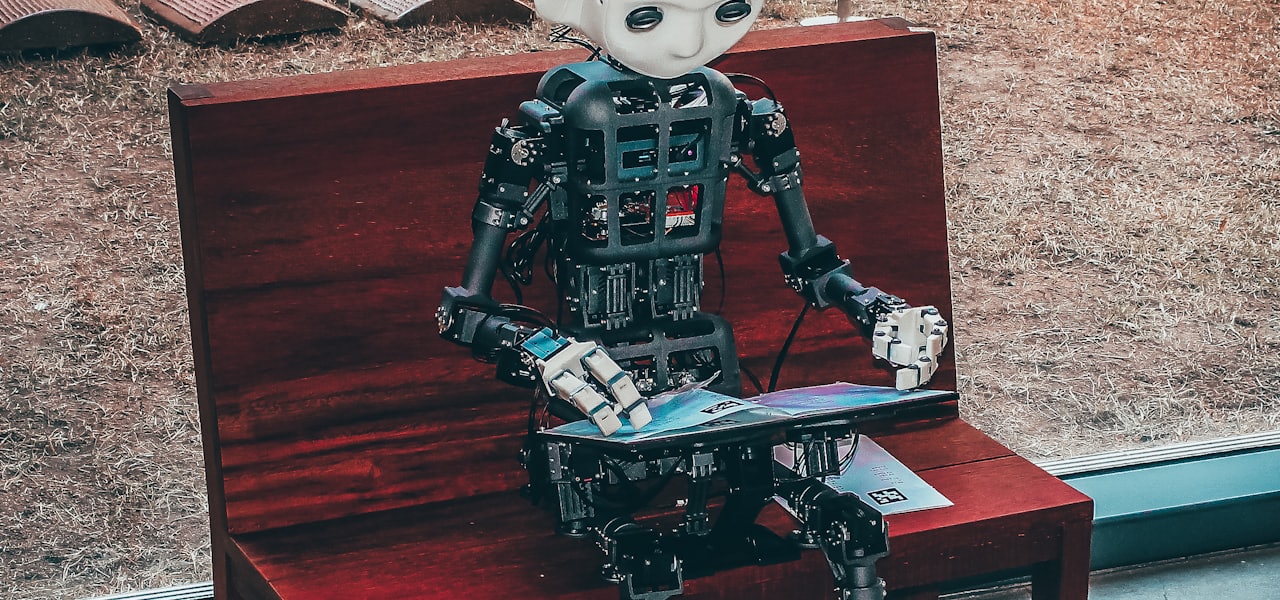
In deep learning, weight initialization or parameter initialization describes the initial step in creating a neural network. A neural network contains trainable parameters that are modified during training: weight initialization is the pre-training step of assigning initial values to these parameters. The choice of weight initialization method affects the speed of convergence, the scale of neural activation within the network, the scale of gradient signals during backpropagation, and the quality of the final model. Proper initialization is necessary for avoiding issues such as vanishing and exploding gradients and activation function saturation. Note that even though this article is titled "weight initialization", both weights and biases are used in a neural network as trainable parameters, so this article describes how both of these are initialized. Similarly, trainable parameters in convolutional neural networks (CNNs) are called kernels and biases, and this article also describes these. == Constant initialization == We discuss the main methods of initialization in the context of a multilayer perceptron (MLP). Specific strategies for initializing other network architectures are discussed in later sections. For an MLP, there are only two kinds of trainable parameters, called weights and biases. Each layer l {\displaystyle l} contains a weight matrix W ( l ) ∈ R n l − 1 × n l {\displaystyle W^{(l)}\in \mathbb {R} ^{n_{l-1}\times n_{l}}} and a bias vector b ( l ) ∈ R n l {\displaystyle b^{(l)}\in \mathbb {R} ^{n_{l}}} , where n l {\displaystyle n_{l}} is the number of neurons in that layer. A weight initialization method is an algorithm for setting the initial values for W ( l ) , b ( l ) {\displaystyle W^{(l)},b^{(l)}} for each layer l {\displaystyle l} . The simplest form is zero initialization: W ( l ) = 0 , b ( l ) = 0 {\displaystyle W^{(l)}=0,b^{(l)}=0} Zero initialization is usually used for initializing biases, but it is not used for initializing weights, as it leads to symmetry in the network, causing all neurons to learn the same features. In this page, we assume b = 0 {\displaystyle b=0} unless otherwise stated. Recurrent neural networks typically use activation functions with bounded range, such as sigmoid and tanh, since unbounded activation may cause exploding values. (Le, Jaitly, Hinton, 2015) suggested initializing weights in the recurrent parts of the network to identity and zero bias, similar to the idea of residual connections and LSTM with no forget gate. In most cases, the biases are initialized to zero, though some situations can use a nonzero initialization. For example, in multiplicative units, such as the forget gate of LSTM, the bias can be initialized to 1 to allow good gradient signal through the gate. For neurons with ReLU activation, one can initialize the bias to a small positive value like 0.1, so that the gradient is likely nonzero at initialization, avoiding the dying ReLU problem. == Random initialization == Random initialization means sampling the weights from a normal distribution or a uniform distribution, usually independently. === LeCun initialization === LeCun initialization, popularized in (LeCun et al., 1998), is designed to preserve the variance of neural activations during the forward pass. It samples each entry in W ( l ) {\displaystyle W^{(l)}} independently from a distribution with mean 0 and variance 1 / n l − 1 {\displaystyle 1/n_{l-1}} . For example, if the distribution is a continuous uniform distribution, then the distribution is U ( ± 3 / n l − 1 ) {\displaystyle {\mathcal {U}}(\pm {\sqrt {3/n_{l-1}}})} . === Glorot initialization === Glorot initialization (or Xavier initialization) was proposed by Xavier Glorot and Yoshua Bengio. It was designed as a compromise between two goals: to preserve activation variance during the forward pass and to preserve gradient variance during the backward pass. For uniform initialization, it samples each entry in W ( l ) {\displaystyle W^{(l)}} independently and identically from U ( ± 6 / ( n l + 1 + n l − 1 ) ) {\displaystyle {\mathcal {U}}(\pm {\sqrt {6/(n_{l+1}+n_{l-1})}})} . In the context, n l − 1 {\displaystyle n_{l-1}} is also called the "fan-in", and n l + 1 {\displaystyle n_{l+1}} the "fan-out". When the fan-in and fan-out are equal, then Glorot initialization is the same as LeCun initialization. === He initialization === As Glorot initialization performs poorly for ReLU activation, He initialization (or Kaiming initialization) was proposed by Kaiming He et al. for networks with ReLU activation. It samples each entry in W ( l ) {\displaystyle W^{(l)}} from N ( 0 , 2 / n l − 1 ) {\displaystyle {\mathcal {N}}(0,2/n_{l-1})} . === Orthogonal initialization === (Saxe et al. 2013) proposed orthogonal initialization: initializing weight matrices as uniformly random (according to the Haar measure) semi-orthogonal matrices, multiplied by a factor that depends on the activation function of the layer. It was designed so that if one initializes a deep linear network this way, then its training time until convergence is independent of depth. Sampling a uniformly random semi-orthogonal matrix can be done by initializing X {\displaystyle X} by IID sampling its entries from a standard normal distribution, then calculate ( X X ⊤ ) − 1 / 2 X {\displaystyle \left(XX^{\top }\right)^{-1/2}X} or its transpose, depending on whether X {\displaystyle X} is tall or wide. For CNN kernels with odd widths and heights, orthogonal initialization is done this way: initialize the central point by a semi-orthogonal matrix, and fill the other entries with zero. As an illustration, a kernel K {\displaystyle K} of shape 3 × 3 × c × c ′ {\displaystyle 3\times 3\times c\times c'} is initialized by filling K [ 2 , 2 , : , : ] {\displaystyle K[2,2,:,:]} with the entries of a random semi-orthogonal matrix of shape c × c ′ {\displaystyle c\times c'} , and the other entries with zero. (Balduzzi et al., 2017) used it with stride 1 and zero-padding. This is sometimes called the Orthogonal Delta initialization. Related to this approach, unitary initialization proposes to parameterize the weight matrices to be unitary matrices, with the result that at initialization they are random unitary matrices (and throughout training, they remain unitary). This is found to improve long-sequence modelling in LSTM. Orthogonal initialization has been generalized to layer-sequential unit-variance (LSUV) initialization. It is a data-dependent initialization method, and can be used in convolutional neural networks. It first initializes weights of each convolution or fully connected layer with orthonormal matrices. Then, proceeding from the first to the last layer, it runs a forward pass on a random minibatch, and divides the layer's weights by the standard deviation of its output, so that its output has variance approximately 1. === Fixup initialization === In 2015, the introduction of residual connections allowed very deep neural networks to be trained, much deeper than the ~20 layers of the previous state of the art (such as the VGG-19). Residual connections gave rise to their own weight initialization problems and strategies. These are sometimes called "normalization-free" methods, since using residual connection could stabilize the training of a deep neural network so much that normalizations become unnecessary. Fixup initialization is designed specifically for networks with residual connections and without batch normalization, as follows: Initialize the classification layer and the last layer of each residual branch to 0. Initialize every other layer using a standard method (such as He initialization), and scale only the weight layers inside residual branches by L − 1 2 m − 2 {\displaystyle L^{-{\frac {1}{2m-2}}}} . Add a scalar multiplier (initialized at 1) in every branch and a scalar bias (initialized at 0) before each convolution, linear, and element-wise activation layer. Similarly, T-Fixup initialization is designed for Transformers without layer normalization. === Others === Instead of initializing all weights with random values on the order of O ( 1 / n ) {\displaystyle O(1/{\sqrt {n}})} , sparse initialization initialized only a small subset of the weights with larger random values, and the other weights zero, so that the total variance is still on the order of O ( 1 ) {\displaystyle O(1)} . Random walk initialization was designed for MLP so that during backpropagation, the L2 norm of gradient at each layer performs an unbiased random walk as one moves from the last layer to the first. Looks linear initialization was designed to allow the neural network to behave like a deep linear network at initialization, since W R e L U ( x ) − W R e L U ( − x ) = W x {\displaystyle W\;\mathrm {ReLU} (x)-W\;\mathrm {ReLU} (-x)=Wx} . It initializes a matrix W {\displaystyle W} of shape R n 2 × m {\displaystyle \mathbb {R} ^{{\frac {n}{2}}\times m}} by any method, such as orthogonal initialization, t
ShowScoop
ShowScoop is a website and mobile app platform on which users can rate and review artists, concerts, and music festivals that they have seen/attended. The reviews and ratings are designed to be informative of how well such performances are live. This helps concert-goers decide which live music events they want to attend. == History == ShowScoop was founded in August 2012 by Micah Smurthwaite and is based out of San Diego, CA. In February 2013, ShowScoop launched its mobile app at the SF Music Tech Summit. The application is currently available on the iPhone, with plans to expand into the Android market in the future. == Services == ShowScoop uses crowdsourcing to provide accurate ratings of live concert experiences. In addition to viewing ratings, users are encouraged to rate and review concerts they have attended. The ShowScoop database includes nearly one million artists and over 2.5 million live music events. ShowScoop users can rate artists on four aspects of the performance: stage presence, crowd interaction, sound quality, and visual effects. The rating system uses an ascending scale from one to five in each of the aspects, with five being the highest score. In addition to the quantitative ratings, ShowScoop users are also free to write qualitative reviews in a provided comment section. This allows users to explain their ratings and add further insight or opinion. ShowScoop incorporates several facets of social media into its services. Users can create a user profile to share limited personal information and store their ratings and reviews. Users are also given the option of sharing their evaluations with their social networks on Facebook and Twitter. Users can "like" reviews, follow artists, and follow other ShowScoop users. The mobile app allows users to take photos, apply filters, and share the final image in conjunction with reviews and through Instagram. == Road Crew == ShowScoop's "Road Crew" is a group made up of top contributors within the ShowScoop community. The Road Crew assists in curating artist pages, assuring information quality and accuracy. In return, members of the Road Crew are given incentives, including free tickets to concerts and personal invitations to exclusive shows. Applicants to the Road Crew are judged on the number and quality of their reviews, the photos and videos they have posted, and their general engagement with the ShowScoop community in following and liking users and reviews.
Optical sorting
Optical sorting (sometimes called digital sorting) is the automated process of sorting solid products using cameras and/or lasers. Depending on the types of sensors used and the software-driven intelligence of the image processing system, optical sorters can recognize an object's color, size, shape, structural properties and chemical composition. The sorter compares objects to user-defined accept/reject criteria to identify and remove defective products and foreign material (FM) from the production line, or to separate product of different grades or types of materials. Optical sorters are in widespread use in the food industry worldwide, with the highest adoption in processing harvested foods such as potatoes, fruits, vegetables and nuts where it achieves non-destructive, 100 percent inspection in-line at full production volumes. The technology is also used in pharmaceutical manufacturing and nutraceutical manufacturing, tobacco processing, waste recycling and other industries. Compared to manual sorting, which is subjective and inconsistent, optical sorting helps improve product quality, maximize throughput and increase yields while reducing labor costs. == History == Optical sorting is an idea that first came out of the desire to automate industrial sorting of agricultural goods like fruits and vegetables. Before automated optical sorting technology was conceived in the 1930s, companies like Unitec were producing wooden machinery to assist in the mechanical sorting of fruit processing. In 1931, a company known as “the Electric Sorting Company” was incorporated and began the creation of the world’s first color sorters, which were being installed and used in Michigan’s bean industry by 1932. In 1937, optical sorting technology had advanced to allow for systems based on a two-color principle of selection. The next few decades saw the installation of new and improved sorting mechanisms, like gravity feed systems and the implementation of optical sorting in more agricultural industries. In the late 1960s, optical sorting began to be implemented to new industries beyond agriculture, like the sorting of ferrous and non-ferrous metals. By the 1990s, optical sorting was being used heavily in the sorting of solid wastes. With the large technological revolution happening in the late 1990s and early 2000s, optical sorters were being made more efficient via the implementation of new optical sensors, like CCD, UV, and IR cameras. Today, optical sorting is used in a wide variety of industries and, as such, is implemented with a varying selection of mechanisms to assist in that specific sorter’s task. == The sorting system == In general, optical sorters feature four major components: the feed system, the optical system, image processing software, and the separation system. The objective of the feed system is to spread products into a uniform monolayer so products are presented to the optical system evenly, without clumps, at a constant velocity. The optical system includes lights and sensors housed above and/or below the flow of the objects being inspected. The image processing system compares objects to user-defined accept/reject thresholds to classify objects and actuate the separation system. The separation system — usually compressed air for small products and mechanical devices for larger products, like whole potatoes — pinpoints objects while in-air and deflects the objects to remove into a reject chute while the good product continues along its normal trajectory. The ideal sorter to use depends on the application. Therefore, the product's characteristics and the user's objectives determine the ideal sensors, software-driven capabilities and mechanical platform. == Sensors == Optical sorters require a combination of lights and sensors to illuminate and capture images of the objects so the images can be processed. The processed images will determine if the material should be accepted or rejected. There are camera sorters, laser sorters and sorters that feature a combination of the two on one platform. Lights, cameras, lasers and laser sensors can be designed to function within visible light wavelengths as well as the infrared (IR) and ultraviolet (UV) spectrums. The optimal wavelengths for each application maximize the contrast between the objects to be separated. Cameras and laser sensors can differ in spatial resolution, with higher resolutions enabling the sorter to detect and remove smaller defects. === Cameras === Monochromatic cameras detect shades of gray from black to white and can be effective when sorting products with high-contrast defects. Sophisticated color cameras with high color resolution are capable of detecting millions of colors to better distinguish more subtle color defects. Trichromatic color cameras (also called three-channel cameras) divide light into three bands, which can include red, green and/or blue within the visible spectrum as well as IR and UV. The interaction of different materials with parts of the electromagnetic spectrum make these contrasts more evident than how they appear to the naked human eye. Coupled with intelligent software, sorters that feature cameras are capable of recognizing each object's color, size and shape; as well as the color, size, shape and location of a defect on a product. Some intelligent sorters even allow the user to define a defective product based on the total defective surface area of any given object. === Lasers === While cameras capture product information based primarily on material reflectance, lasers and their sensors are able to distinguish a material's structural properties along with their color. This structural property inspection allows lasers to detect a wide range of organic and inorganic foreign material such as insects, glass, metal, sticks, rocks and plastic; even if they are the same color as the good product. Lasers can be designed to operate within specific wavelengths of light; whether on the visible spectrum or beyond. For example, lasers can detect chlorophyll by stimulating fluorescence using specific wavelengths; which is a process that is very effective for removing foreign material from green vegetables. === Camera/laser combinations === Sorters equipped with cameras and lasers on one platform are generally capable of identifying the widest variety of attributes. Cameras are often better at recognizing color, size and shape while laser sensors identify differences in structural properties to maximize foreign material detection and removal. === Hyperspectral Imaging === Driven by the need to solve previously impossible sorting challenges, a new generation of sorters that feature multispectral and hyperspectral imaging Optical Sorters. Like trichromatic cameras, multispectral and hyperspectral cameras collect data from the electromagnetic spectrum. Unlike trichromatic cameras, which divide light into three bands, hyperspectral systems can divide light into hundreds of narrow bands over a continuous range that covers a vast portion of the electromagnetic spectrum. This opens the door for more detailed analysis that leads to a more consistent product. Using IR alone might detect some defects, but combining it with a broader range of the spectrum makes it more effective. Compared to the three data points per pixel collected by trichromatic cameras, hyperspectral cameras can collect hundreds of data points per pixel, which are combined to create a unique spectral signature (also called a fingerprint) for each object. When complemented by capable software intelligence, a hyperspectral sorter processes those fingerprints to enable sorting on the chemical composition of the product. This is an emerging area of chemometrics. == Software-driven intelligence == Once the sensors capture the object's response to the energy source, image processing is used to manipulate the raw data. The image processing extracts and categorizes information about specific features. The user then defines accept/reject thresholds that are used to determine what is good and bad in the raw data flow. The art and science of image processing lies in developing algorithms that maximize the effectiveness of the sorter while presenting a simple user-interface to the operator. Object-based recognition is a classic example of software-driven intelligence. It allows the user to define a defective product based on where a defect lies on the product and/or the total defective surface area of an object. It offers more control in defining a wider range of defective products. When used to control the sorter's ejection system, it can improve the accuracy of ejecting defective products. This improves product quality and increases yields. New software-driven capabilities are constantly being developed to address the specific needs of various applications. As computing hardware becomes more powerful, new software-driven advancements become possible. Some of these advancements enhance the effectivene
Non-native speech database
A non-native speech database is a speech database of non-native pronunciations of English. Such databases are used in the development of: multilingual automatic speech recognition systems, text to speech systems, pronunciation trainers, and second language learning systems. == List == The actual table with information about the different databases is shown in Table 2. === Legend === In the table of non-native databases some abbreviations for language names are used. They are listed in Table 1. Table 2 gives the following information about each corpus: The name of the corpus, the institution where the corpus can be obtained, or at least further information should be available, the language which was actually spoken by the speakers, the number of speakers, the native language of the speakers, the total amount of non-native utterances the corpus contains, the duration in hours of the non-native part, the date of the first public reference to this corpus, some free text highlighting special aspects of this database and a reference to another publication. The reference in the last field is in most cases to the paper which is especially devoted to describe this corpus by the original collectors. In some cases it was not possible to identify such a paper. In these cases a paper is referenced which is using this corpus is. Some entries are left blank and others are marked with unknown. The difference here is that blank entries refer to attributes where the value is just not known. Unknown entries, however, indicate that no information about this attribute is available in the database itself. As an example, in the Jupiter weather database no information about the origin of the speakers is given. Therefore this data would be less useful for verifying accent detection or similar issues. Where possible, the name is a standard name of the corpus, for some of the smaller corpora, however, there was no established name and hence an identifier had to be created. In such cases, a combination of the institution and the collector of the database is used. In the case where the databases contain native and non-native speech, only attributes of the non-native part of the corpus are listed. Most of the corpora are collections of read speech. If the corpus instead consists either partly or completely of spontaneous utterances, this is mentioned in the Specials column.
Plum Voice
The Plum Group, Inc. (DBA Plum Voice) is a company. Plum is headquartered in New York City with offices in Boston and Denver. == History == Plum Voice, founded in 2000 as The Plum Group, Inc., was incorporated to create technologies for personalized audio communication. By 2001, Plum had commercialized the open-standard Plum VoiceXML IVR platform which facilitated the creation of dynamic telecom applications. 2001 - Commercial launch of Plum VoiceXML IVR platform for customer-premises deployment 2002 - Launch of Plum Voice Hosting Centers for 24x7x365 managed IVR hosting 2004 - Plum Voice application suite receives a "Product of the Year" award from Customer Interactions magazine 2008 - Plum Survey builder launched, a do-it-yourself IVR survey tool. 2010 - Plum launched QuickFuse, a web-based rapid development platform used to create voice applications. 2013 - Plum launched VoiceTrends, an analytics and reporting toolkit designed specifically for voice applications. Plum achieves PCI-DSS Level 1. 2015 - Plum launched Plum Insight, a multi-channel (voice, web, mobile) survey platform. Plum achieves HIPAA compliance. 2016 - Plum launched a new version of QuickFuse called Fuse+. 2020 - Plum sunsets QuickFuse, rebrands Fuse+ as Plum Fuse.
Inductive bias
The inductive bias (also known as learning bias) of a learning algorithm is the set of assumptions that the learner uses to predict outputs of given inputs that it has not encountered. Inductive bias is anything which makes the algorithm learn one pattern instead of another pattern (e.g., step-functions in decision trees instead of continuous functions in linear regression models). Learning involves searching a space of solutions for a solution that provides a good explanation of the data. However, in many cases, there may be multiple equally appropriate solutions. An inductive bias allows a learning algorithm to prioritize one solution (or interpretation) over another, independently of the observed data. In machine learning, the aim is to construct algorithms that are able to learn to predict a certain target output. To achieve this, the learning algorithm is presented some training examples that demonstrate the intended relation of input and output values. Then the learner is supposed to approximate the correct output, even for examples that have not been shown during training. Without any additional assumptions, this problem cannot be solved since unseen situations might have an arbitrary output value. The kind of necessary assumptions about the nature of the target function are subsumed in the phrase inductive bias. A classical example of an inductive bias is Occam's razor, assuming that the simplest consistent hypothesis about the target function is actually the best. Here, consistent means that the hypothesis of the learner yields correct outputs for all of the examples that have been given to the algorithm. Approaches to a more formal definition of inductive bias are based on mathematical logic. Here, the inductive bias is a logical formula that, together with the training data, logically entails the hypothesis generated by the learner. However, this strict formalism fails in many practical cases in which the inductive bias can only be given as a rough description (e.g., in the case of artificial neural networks), or not at all. == Types == The following is a list of common inductive biases in machine learning algorithms. Maximum conditional independence: if the hypothesis can be cast in a Bayesian framework, try to maximize conditional independence. This is the bias used in the Naive Bayes classifier. Minimum cross-validation error: when trying to choose among hypotheses, select the hypothesis with the lowest cross-validation error. Although cross-validation may seem to be free of bias, the "no free lunch" theorems show that cross-validation must be biased, for example assuming that there is no information encoded in the ordering of the data. Maximum margin: when drawing a boundary between two classes, attempt to maximize the width of the boundary. This is the bias used in support vector machines. The assumption is that distinct classes tend to be separated by wide boundaries. Minimum description length: when forming a hypothesis, attempt to minimize the length of the description of the hypothesis. Minimum features: unless there is good evidence that a feature is useful, it should be deleted. This is the assumption behind feature selection algorithms. Nearest neighbors: assume that most of the cases in a small neighborhood in feature space belong to the same class. Given a case for which the class is unknown, guess that it belongs to the same class as the majority in its immediate neighborhood. This is the bias used in the k-nearest neighbors algorithm. The assumption is that cases that are near each other tend to belong to the same class. == Shift of bias == Although most learning algorithms have a static bias, some algorithms are designed to shift their bias as they acquire more data. This does not avoid bias, since the bias shifting process itself must have a bias.
Tensor operator
In pure and applied mathematics, quantum mechanics and computer graphics, a tensor operator generalizes the notion of operators which are scalars and vectors. A special class of these are spherical tensor operators which apply the notion of the spherical basis and spherical harmonics. The spherical basis closely relates to the description of angular momentum in quantum mechanics and spherical harmonic functions. The coordinate-free generalization of a tensor operator is known as a representation operator. == The general notion of scalar, vector, and tensor operators == In quantum mechanics, physical observables that are scalars, vectors, and tensors, must be represented by scalar, vector, and tensor operators, respectively. Whether something is a scalar, vector, or tensor depends on how it is viewed by two observers whose coordinate frames are related to each other by a rotation. Alternatively, one may ask how, for a single observer, a physical quantity transforms if the state of the system is rotated. Consider, for example, a system consisting of a molecule of mass M {\displaystyle M} , traveling with a definite center of mass momentum, p z ^ {\displaystyle p{\mathbf {\hat {z}} }} , in the z {\displaystyle z} direction. If we rotate the system by 90 ∘ {\displaystyle 90^{\circ }} about the y {\displaystyle y} axis, the momentum will change to p x ^ {\displaystyle p{\mathbf {\hat {x}} }} , which is in the x {\displaystyle x} direction. The center-of-mass kinetic energy of the molecule will, however, be unchanged at p 2 / 2 M {\displaystyle p^{2}/2M} . The kinetic energy is a scalar and the momentum is a vector, and these two quantities must be represented by a scalar and a vector operator, respectively. By the latter in particular, we mean an operator whose expected values in the initial and the rotated states are p z ^ {\displaystyle p{\mathbf {\hat {z}} }} and p x ^ {\displaystyle p{\mathbf {\hat {x}} }} . The kinetic energy on the other hand must be represented by a scalar operator, whose expected value must be the same in the initial and the rotated states. In the same way, tensor quantities must be represented by tensor operators. An example of a tensor quantity (of rank two) is the electrical quadrupole moment of the above molecule. Likewise, the octupole and hexadecapole moments would be tensors of rank three and four, respectively. Other examples of scalar operators are the total energy operator (more commonly called the Hamiltonian), the potential energy, and the dipole-dipole interaction energy of two atoms. Examples of vector operators are the momentum, the position, the orbital angular momentum, L {\displaystyle {\mathbf {L} }} , and the spin angular momentum, S {\displaystyle {\mathbf {S} }} . (Fine print: Angular momentum is a vector as far as rotations are concerned, but unlike position or momentum it does not change sign under space inversion, and when one wishes to provide this information, it is said to be a pseudovector.) Scalar, vector and tensor operators can also be formed by products of operators. For example, the scalar product L ⋅ S {\displaystyle {\mathbf {L} }\cdot {\mathbf {S} }} of the two vector operators, L {\displaystyle {\mathbf {L} }} and S {\displaystyle {\mathbf {S} }} , is a scalar operator, which figures prominently in discussions of the spin–orbit interaction. Similarly, the quadrupole moment tensor of our example molecule has the nine components Q i j = ∑ α q α ( 3 r α , i r α , j − r α 2 δ i j ) . {\displaystyle Q_{ij}=\sum _{\alpha }q_{\alpha }\left(3r_{\alpha ,i}r_{\alpha ,j}-r_{\alpha }^{2}\delta _{ij}\right).} Here, the indices i {\displaystyle i} and j {\displaystyle j} can independently take on the values 1, 2, and 3 (or x {\displaystyle x} , y {\displaystyle y} , and z {\displaystyle z} ) corresponding to the three Cartesian axes, the index α {\displaystyle \alpha } runs over all particles (electrons and nuclei) in the molecule, q α {\displaystyle q_{\alpha }} is the charge on particle α {\displaystyle \alpha } , and r α , i {\displaystyle r_{\alpha ,i}} is the i {\displaystyle i} -th component of the position of this particle. Each term in the sum is a tensor operator. In particular, the nine products r α , i r α , j {\displaystyle r_{\alpha ,i}r_{\alpha ,j}} together form a second rank tensor, formed by taking the outer product of the vector operator r α {\displaystyle {\mathbf {r} }_{\alpha }} with itself. == Rotations of quantum states == === Quantum rotation operator === The rotation operator about the unit vector n (defining the axis of rotation) through angle θ is U [ R ( θ , n ^ ) ] = exp ( − i θ ℏ n ^ ⋅ J ) {\displaystyle U[R(\theta ,{\hat {\mathbf {n} }})]=\exp \left(-{\frac {i\theta }{\hbar }}{\hat {\mathbf {n} }}\cdot \mathbf {J} \right)} where J = (Jx, Jy, Jz) are the rotation generators (also the angular momentum matrices): J x = ℏ 2 ( 0 1 0 1 0 1 0 1 0 ) J y = ℏ 2 ( 0 i 0 − i 0 i 0 − i 0 ) J z = ℏ ( − 1 0 0 0 0 0 0 0 1 ) {\displaystyle J_{x}={\frac {\hbar }{\sqrt {2}}}{\begin{pmatrix}0&1&0\\1&0&1\\0&1&0\end{pmatrix}}\,\quad J_{y}={\frac {\hbar }{\sqrt {2}}}{\begin{pmatrix}0&i&0\\-i&0&i\\0&-i&0\end{pmatrix}}\,\quad J_{z}=\hbar {\begin{pmatrix}-1&0&0\\0&0&0\\0&0&1\end{pmatrix}}} and let R ^ = R ^ ( θ , n ^ ) {\displaystyle {\widehat {R}}={\widehat {R}}(\theta ,{\hat {\mathbf {n} }})} be a rotation matrix. According to the Rodrigues' rotation formula, the rotation operator then amounts to U [ R ( θ , n ^ ) ] = 1 1 − i sin θ ℏ n ^ ⋅ J − 1 − cos θ ℏ 2 ( n ^ ⋅ J ) 2 . {\displaystyle U[R(\theta ,{\hat {\mathbf {n} }})]=1\!\!1-{\frac {i\sin \theta }{\hbar }}{\hat {\mathbf {n} }}\cdot \mathbf {J} -{\frac {1-\cos \theta }{\hbar ^{2}}}({\hat {\mathbf {n} }}\cdot \mathbf {J} )^{2}.} An operator Ω ^ {\displaystyle {\widehat {\Omega }}} is invariant under a unitary transformation U if Ω ^ = U † Ω ^ U ; {\displaystyle {\widehat {\Omega }}={U}^{\dagger }{\widehat {\Omega }}U;} in this case for the rotation U ^ ( R ) {\displaystyle {\widehat {U}}(R)} , Ω ^ = U ( R ) † Ω ^ U ( R ) = exp ( i θ ℏ n ^ ⋅ J ) Ω ^ exp ( − i θ ℏ n ^ ⋅ J ) . {\displaystyle {\widehat {\Omega }}={U(R)}^{\dagger }{\widehat {\Omega }}U(R)=\exp \left({\frac {i\theta }{\hbar }}{\hat {\mathbf {n} }}\cdot \mathbf {J} \right){\widehat {\Omega }}\exp \left(-{\frac {i\theta }{\hbar }}{\hat {\mathbf {n} }}\cdot \mathbf {J} \right).} === Angular momentum eigenkets === The orthonormal basis set for total angular momentum is | j , m ⟩ {\displaystyle |j,m\rangle } , where j is the total angular momentum quantum number and m is the magnetic angular momentum quantum number, which takes values −j, −j + 1, ..., j − 1, j. A general state within the j subspace | ψ ⟩ = ∑ m c j m | j , m ⟩ {\displaystyle |\psi \rangle =\sum _{m}c_{jm}|j,m\rangle } rotates to a new state by: | ψ ¯ ⟩ = U ( R ) | ψ ⟩ = ∑ m c j m U ( R ) | j , m ⟩ {\displaystyle |{\bar {\psi }}\rangle =U(R)|\psi \rangle =\sum _{m}c_{jm}U(R)|j,m\rangle } Using the completeness condition: I = ∑ m ′ | j , m ′ ⟩ ⟨ j , m ′ | {\displaystyle I=\sum _{m'}|j,m'\rangle \langle j,m'|} we have | ψ ¯ ⟩ = I U ( R ) | ψ ⟩ = ∑ m m ′ c j m | j , m ′ ⟩ ⟨ j , m ′ | U ( R ) | j , m ⟩ {\displaystyle |{\bar {\psi }}\rangle =IU(R)|\psi \rangle =\sum _{mm'}c_{jm}|j,m'\rangle \langle j,m'|U(R)|j,m\rangle } Introducing the Wigner D matrix elements: D ( R ) m ′ m ( j ) = ⟨ j , m ′ | U ( R ) | j , m ⟩ {\displaystyle {D(R)}_{m'm}^{(j)}=\langle j,m'|U(R)|j,m\rangle } gives the matrix multiplication: | ψ ¯ ⟩ = ∑ m m ′ c j m D m ′ m ( j ) | j , m ′ ⟩ ⇒ | ψ ¯ ⟩ = D ( j ) | ψ ⟩ {\displaystyle |{\bar {\psi }}\rangle =\sum _{mm'}c_{jm}D_{m'm}^{(j)}|j,m'\rangle \quad \Rightarrow \quad |{\bar {\psi }}\rangle =D^{(j)}|\psi \rangle } For one basis ket: | j , m ¯ ⟩ = ∑ m ′ D ( R ) m ′ m ( j ) | j , m ′ ⟩ {\displaystyle |{\overline {j,m}}\rangle =\sum _{m'}{D(R)}_{m'm}^{(j)}|j,m'\rangle } For the case of orbital angular momentum, the eigenstates | ℓ , m ⟩ {\displaystyle |\ell ,m\rangle } of the orbital angular momentum operator L and solutions of Laplace's equation on a 3d sphere are spherical harmonics: Y ℓ m ( θ , ϕ ) = ⟨ θ , ϕ | ℓ , m ⟩ = ( 2 ℓ + 1 ) 4 π ( ℓ − m ) ! ( ℓ + m ) ! P ℓ m ( cos θ ) e i m ϕ {\displaystyle Y_{\ell }^{m}(\theta ,\phi )=\langle \theta ,\phi |\ell ,m\rangle ={\sqrt {{(2\ell +1) \over 4\pi }{(\ell -m)! \over (\ell +m)!}}}\,P_{\ell }^{m}(\cos {\theta })\,e^{im\phi }} where Pℓm is an associated Legendre polynomial, ℓ is the orbital angular momentum quantum number, and m is the orbital magnetic quantum number which takes the values −ℓ, −ℓ + 1, ... ℓ − 1, ℓ The formalism of spherical harmonics have wide applications in applied mathematics, and are closely related to the formalism of spherical tensors, as shown below. Spherical harmonics are functions of the polar and azimuthal angles, ϕ and θ respectively, which can be conveniently collected into a unit vector n(θ, ϕ) pointing in the direction of those angles, in the Cartesian basis it is: n ^ ( θ , ϕ ) = cos ϕ sin θ e x + s